1. Choose the Right BackpackSelect a backpack that is:
- Lightweight yet durable, made of strong material without adding extra weight.
- Equipped with two wide, padded shoulder straps, a chest strap, and a hip strap to help distribute weight evenly.
- Designed with multiple compartments, allowing even weight distribution and reducing spinal strain.
- Contoured to the natural curve of the spine, with adjustable straps for a comfortable fit.
- Properly sized for your child — the backpack should not be wider than the shoulders or hang more than a few centimeters below the waistline. Bigger is not better.

2. Pack It Smartly
- Teach your child how to load the backpack properly — place heavier items close to the back and lighter items toward the front.
- Avoid overloading. The total weight of the backpack should generally not exceed 10–15% of your child’s body weight.
- Check regularly what your child carries to remove unnecessary items.
3. Wear It Correctly
- Always use both shoulder straps. Carrying a backpack on one shoulder creates uneven stress and may lead to poor posture.
- Tighten the straps so the backpack rests evenly on the back, with the bottom sitting comfortably on the hips — not sagging below the waist.
- Use the hip and chest straps to help transfer weight from the shoulders to the stronger pelvic area, where the body is designed to bear load.
4. Watch for Warning Signs
- Ask your child if they experience any back, shoulder, or neck pain while carrying their backpack.
- Look out for signs such as leaning forward, struggling to put on the backpack, or red marks on the shoulders — these may indicate the backpack is too heavy or not fitted correctly.
These are the recommended maximum weights that your child should carry:
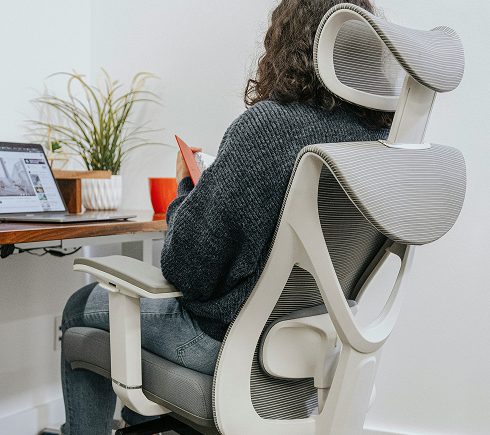
In the ideal typing posture, the following points are critical to good ERGONOMICS:
Promote blood circulation. While typing, your elbow angle should remain open to promote circulation to the lower arms and hands. So should your abdominal angle and your popliteal angle behind your knees be kept opened to promote blood circulation to the lower extremities.
Organize your desk space. Have your monitor and reading material directly in front of you to avoid twisting your neck and shoulders excessively while working.Sit in a slightly reclined position between 100 to 110 degrees. Sitting at a 90-degree angle is very stressful for your back. Always ensure that your low back rests against the lumbar support of the chair.
Typing technique must be correct. If your job requires you to type extensively, it would be most practical to learn to type properly. Avoid excessive head tilting which causes neck strain.
Understand your work pattern. Make sure that you can have regular rest breaks so that you do not stay prolonged in one static posture.
Relax your arms, shoulders, neck and back. Your keyboard should be below your seated elbow height, and its base should gently slope away from you allowing your hands to reach the key tops with your hands in a neutral position.
Ensure that your feet rest firmly upon the floor. Leaving your feet hanging or partially supported above the floor for long periods of time leads to muscle fatigue.
In the ideal sleeping posture, the following points are critical to good ERGONOMICS:
Supporting the Spine One of the major factors adversely affecting the quality of sleep is the unsatisfactory support of the spine during sleep. A good sleeping system and the correct sleeping posture allow back muscles to relax and promote the rehydration of the unloaded intervertebral discs of the spine.
Local Is chemy Ischemy arises in your body zones that are in contact with your sleeping system. It results in the formation of toxic metabolic substances that stimulate sensitive nerves, which in turn, cause you to change your posture before it gets too painful. An extreme example of the effects of local ischemy is the development of "bedsores" in bedridden persons who remain in a particular position for protracted periods of time. This undesirable reaction to your sleeping system emphasizes that a good sleeping system provides firm support but it should not be too hard to cause local ischemy to develop disturbing your sleep and making you change your position many times during the night.
Evaluating your Sleeping System Since most of your body weight is concentrated around your hip area, mattress wear is greatest at this point. If your mattress already has a depression in this area, sleeping on your back can cause increased anterior intervertebral disc pressure, or if you sleep on your side, increased torsion of the low back. Some sleeping systems have a stiffer zone corresponding to the hip area while some visco-elastic systems intrinsically disperse the concentrated body weight into the mattress material. You must also consider the type of pillow that you are using. Pillows should support your neck in its neutral and lordotic posture.
Enough Sleep? Sleeping habits are age-related. Older people sleep for a shorter time, change their positions less frequently, and have a preferred posture to sleep in, mostly on the right side and rarely in a prone position. Some research suggests that all one needs is 4 cycles of Rapid Eye Movement (REM) sleep per night to "re-organize" our brain patterns. As each REM cycle lasts about 45 minutes, some people can survive on 4 hours of sleep. But generally, 6 to 8 hours of sleep per night provide adequate mental and physical rest.
Postures - which is the best for supporting the spine? Most people have a preferred posture to fall asleep in - statistically, 65% sleep on their side, 30% on their back, and 5% on their front. Generally, sleeping on one's back provides the best support as this position spreads the weight of your body over a larger surface area. Sleeping on one's side is adequate when there is good head and neck support; that is, the neck should assume a neutral posture.
Incorrect Posture - Sleeping on your front increases curvature of the lumbar spine resulting in pressure on the posterior joints and tension on the anterior soft tissues. Furthermore, in this posture, more of your body weight rests on your rib cage and intestines, which in turn press against the diaphragm and onto the lungs. This posture also necessitates turning the head to the side for improved breathing, which increases neck rotation.